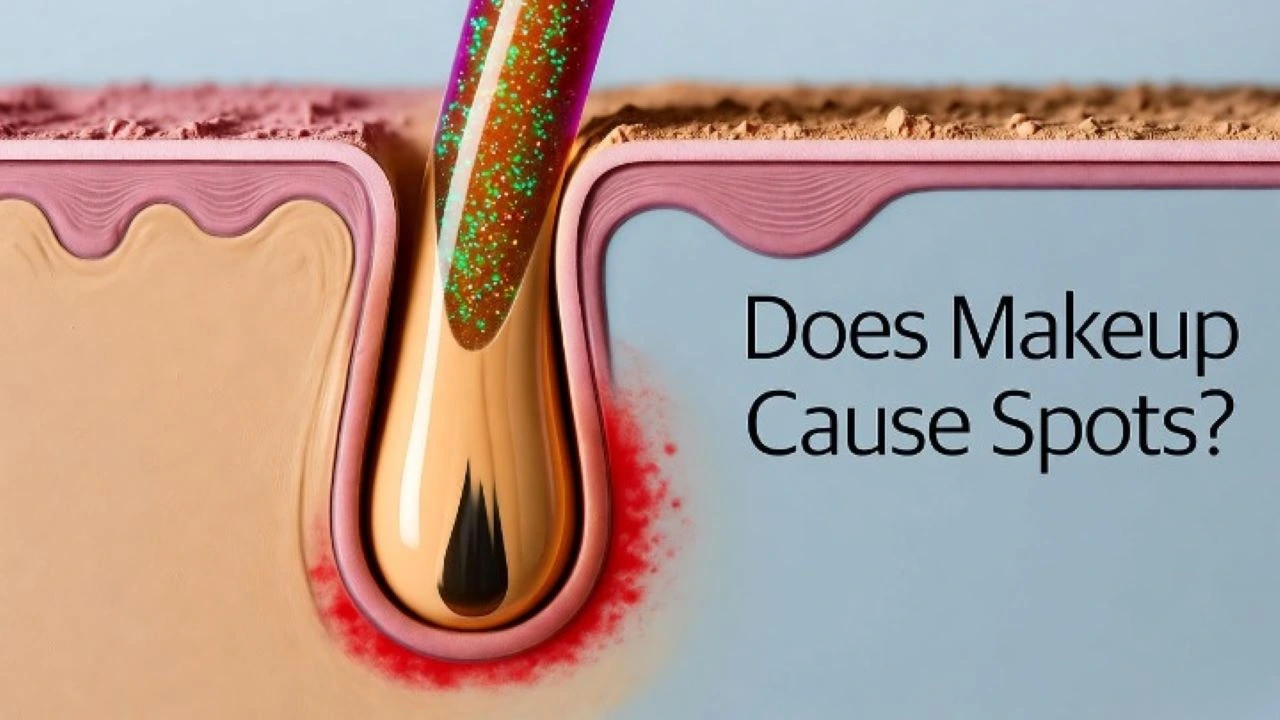
If you’ve ever seen an accumulation of bumps on your face after applying the application of a new makeup product You’ve probably asked yourself: does makeup cause spots? The relationship between makeup and acne is a frequent worry for anyone who enjoys wearing makeup, yet also desires clean skin. The short answer is that yes makeup does cause spots, which dermatologists call acne-related cosmetica. But it doesn’t mean you have to throw away your makeup bag completely.
Knowing why and how breakouts happen can be the initial step to stopping them. If you choose the right products and observing a regular regimen for your skin, you can wear makeup with confidence and not risk the health of your skin. This comprehensive guide will examine the science behind acne-related breakouts due to makeup and the most common causes and offer practical solutions to keep your skin clean and glowing.
What is Acne Cosmetica? Understanding the Spots Caused by Makeup
If makeup causes breakouts, dermatologists categorize it as an ailment known as acne cosmetica. This isn’t the exact same thing as the genetic or hormonal acne that typically manifests in the adolescent years. It’s more likely that the acne cosmetica generally manifests in the form of tiny bumps and whiteheads that appear on your cheeks, the chin or forehead . The breakouts may appear in a range of days up to six months after starting using the latest product, which makes it difficult to pinpoint the cause .
The biological process is quite simple Certain ingredients in makeup can physically block pores which are tiny holes within your skin in which hair follicles as well as oil glands are located. If these pores are filled with cellulite that has died, as well as the natural oil that your skin produces (sebum) and sebum, they create the perfect conditions for pimples and bumps appear . It’s a frustrating process when using makeup to cover up blemishes and then accidentally create new ones. Understanding this pattern is crucial in breaking the cycle and getting clearer skin.
The Main Culprits: How Makeup Leads to Breakouts
There are a variety of factors that determine the possibility that your makeup can cause spots. When you understand these causes that affect your skin, you can make informed decisions about the products you put on your skin.
1. Comedogenic Ingredients: The Pore-Cloggers
“Comedogenic” is a term used to describe “comedogenic” refers to a substance’s capacity to clog pores. Certain ingredients that are commonly used in cosmetics have been identified to be a cause of acne. A 2025 study of case-control revealed that certain categories of products that included cleansing products for the face, foundation as well as powders are associated with the risk of getting acne . The study found that powders may be a risk aspect, with one study that found that people who use them were 3.47 times more chance of getting acne .
2. The Domino Effect of Improper Makeup Removal
One of the most frequent ways makeup can cause spots is because of insufficient removal. If you leave makeup on for a long time it will mix with dirt, pollutants and the natural oils, resulting in a pore-clogging mix . This prevents the skin from breathing but it also interferes with its natural regeneration process, which could result in premature ageing and collagen breakdown in the course of time . Cleansing your skin is essential in order to avoid breakouts.
3. The Dirty Secret of Makeup Tools and Product Contamination
Clean makeup brushes can cause acne by storing bacteria, oil and old makeup . Each time you use a dirty brush, you’re spreading these acne-causing agents directly to your face. Additionally, using makeup that has expired or sharing products with friends could introduce new bacteria onto your face, which can cause acne and irritation .
4. Skin Irritation and Allergic Reactions
Sometimes something that appears to be acne may be a reaction to skin. In the event that your skin becomes sensitive a particular ingredient in a cosmetic this can trigger an inflammation that manifests as swelling, redness, and spots that resemble red patches . This is not the same as traditional acne, but it can be equally a source of distress.
Table: Makeup Products That Commonly Cause Spots and Safer Alternatives
| Product Type | Why It Can Cause Spots | Better Alternatives |
|---|---|---|
| Liquid Foundation | Most often, they contain emollients and oils that can clog pores | Non-comedogenic foundations, oil-free or foundations made of water |
| Concealer | The thick texture may impair pores, particularly if it’s not cleaned properly | non-comedogenic concealers that say “won’t clog pores” |
| Powder | Particles can combine with oils of the skin, causing obstructions in the pore. | Cosmetics made of minerals using simple ingredients |
| Primer | Silicone-based formulas may sometimes contain particles | Hypoallergenic primers or those marked oil-free |
A Plan of Action: Avoid breakouts caused by makeup
The great thing is you do not need to make a choice between wearing makeup or having clean skin. Applying these proven strategies will aid in preventing breakouts from happening again.
1. Choose Your Makeup Wisely: A Shopper’s Guide
The art of choosing skin-friendly makeup is your first line protection against makeup that can cause breakouts.
- Search for key terms on the label If you are shopping, look for products that are labeled “non-comedogenic,” “oil-free,” or “won’t clog pores” . These are formulations specifically made to reduce the chance of being the cause of acne.
- Look into the Mineral makeup: Mineral makeup for skin that is sensitive is usually a good choice because it’s generally light and has less potential for irritation as well as less likely block pores .
- Learn “Hypoallergenic”: While hypoallergenic makeup is targeted at sensitive skin but it’s not a guarantee that it will not cause breakouts. It is primarily a sign that it will not cause allergic reactions, however it’s still important to check the ingredients list .
2. Master Your Makeup Removal Routine
A proper method of removing makeup is as crucial as selecting the appropriate products. An organized evening routine is vital to figure out “how to stop makeup from causing acne.”
- Take off your makeup every night without a hitch No matter how exhausted you are, don’t sleep with makeup on. Begin at the beginning with an oil-free makeup remover to help break down makeup particularly around the eyes .
- Double Cleaning Method for a truly deep cleanse, try the double cleansing technique. Start with the gentle cleansing oil or micellar solution to melt makeup. Then, you can follow it up with the “best way to remove makeup to prevent spots” is to use a water-based non-comedogenic cleanser, to remove the remaining dirt .
- Be gentle Avoid rubbing your skin with abrasions since this could cause inflammation and irritation which could lead to hyperpigmentation post-inflammatory (dark spot) .
3. Establish a Supportive Skincare Routine
A well-balanced skincare regimen can create a healthy foundation which can better withstand wear and tear.
- Cleanse twice a day Wash your face each morning and before going to bed with an easy cleanser that is non-comedogenic and not greasy . If you work out or perform things that make you sweat, you should wash your face afterwards too.
- Include ingredients that fight acne If you’re prone to breakouts, try using products that contain ingredients such as benzoyl-peroxide (fights bacteria) and salicylic acid (unclogs pores) and the ingredient adapalene (promotes growth of the cells) .
- Moisturize Appropriately: Even oily skin needs hydration. Utilize a non-comedogenic, oil-free moisturizer to help maintain the skin’s barrier without introducing additional pore-clogging ingredients.
4. Maintain Impeccable Makeup Hygiene
Your makeup and accessories could become sources of bacteria’s growth when they are not taken care of properly.
- Clean your brushes regularly: Dirty makeup brushes can cause acne and blemishes, so make it an habit to clean them at least twice a every week with a gentle wash or brush cleanser .
- Don’t share your makeup Although acne isn’t infectious Sharing makeup can transmit acne-causing bacteria, oils, as well as dead cells of the skin from one to another .
- Replace products regularly Be aware of expiration dates, in particular for liquid products such as foundation and concealer which could be a home for more bacteria as time passes.
Special Considerations: Addressing Common Concerns
Is Primer Bad for Acne?
Does primer cause acne? Not necessarily. Although some primers made of silicone can possibly trap dirt and oil when not properly cleaned Many primers are made as non-comedogenic. The most important thing is to select the primer that is labeled so and make sure you’re cleaning it in a thorough manner every at night.
The Foundation Dilemma: Does Foundation Clog Pores?
Does foundation block pores? It can, particularly thicker formulations based on oil. However, most modern foundations are designed not to. Research suggests it is that the liquid type foundation was often utilized by patients suffering from acne that was resistant to treatment . Choose a light foundations, without oil, or water-based foundations to limit the danger.
When to Suspect Your Concealer
Can concealer cause spots? Absolutely. Concealers can be more slender than foundations and are usually applied to areas that are already prone to acne. In the event that you experience breakouts on areas you have applied concealer, this product could be the cause.
When to See a Dermatologist
If you’ve heeded the suggestions in this article for a few weeks but you’re having breakouts still Perhaps it’s an appropriate time to seek help from a professional. A dermatologist who is board certified can assist you in determining the exact factors that cause your acne, provide specific treatments, and give specific advice specific to your skin type and needs . This is especially crucial in cases of severe acne or painful, or is causing damage.
Conclusion: Can You Wear Makeup Without Getting Spots?
So, does makeup cause spots? The evidence suggests that it does, however it doesn’t need to. The connection between your appearance and complexion’s appearance is largely dependent on your choices, from the product you choose and the methods you employ to take them off. If you choose products that are not comedogenic or oil-free formulations, ensuring regular and thorough cleanse routine and ensuring the best practices for makeup hygiene will significantly lower the risk of developing acne-related cosmetica.
Keep in mind that achieving clean skin even when wearing makeup is an balancing action that requires a sense of constant effort. Your skin is different and what works for other people might not work for you. Take your time to discover the best way to treat your skin and don’t be afraid to modify your routine if needed.
What’s been your biggest obstacle in avoiding breakouts caused by makeup? Tell us about your experiences or concerns in the comments below. We’d like to know from you, and assist you get started on the path towards healthier skin!