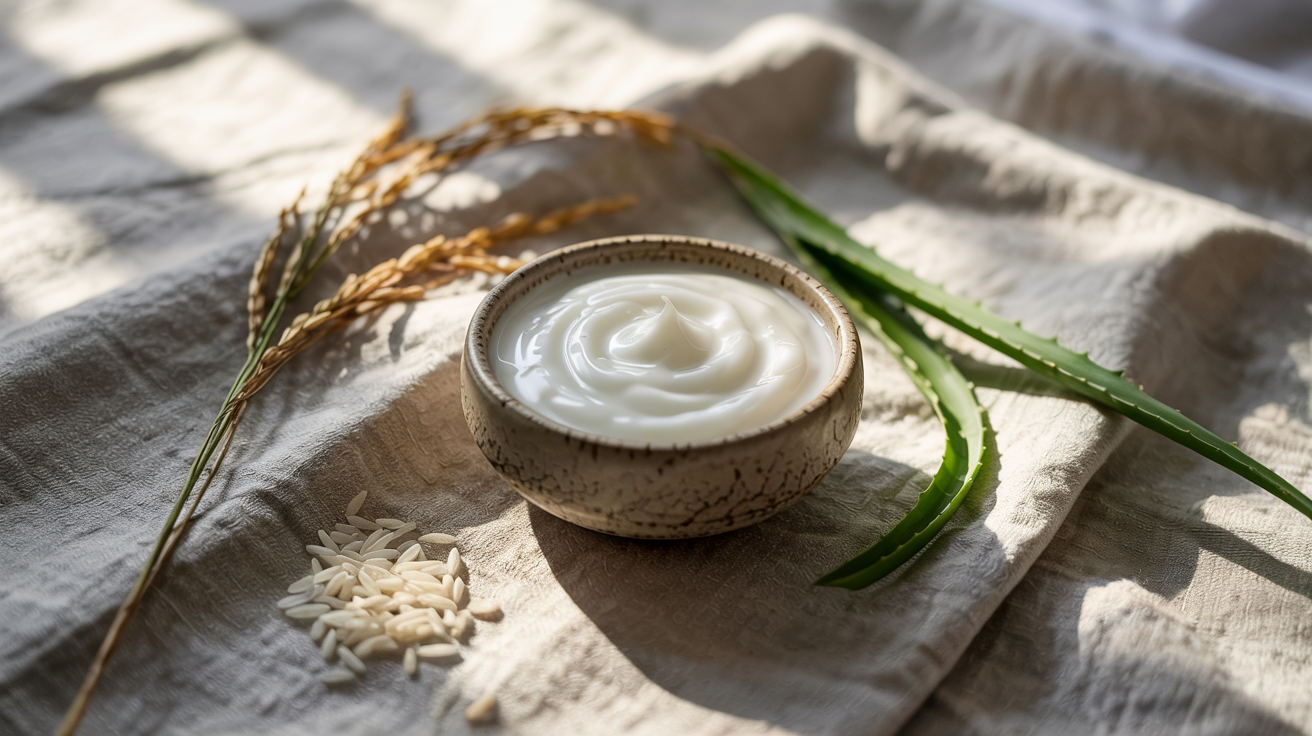
In a world where the skincare aisles are filled with complicated chemical names and bold claims, a simple, old ingredient is making an impressive return. rice cream is becoming the foundation of natural and efficient beauty routines. What exactly is it and what is it that has been capturing the attention of DIY-lovers and parents too? This complete guide dives into the science and tradition and the practical steps needed to discover the transformational advantages of using rice cream on your skin. If you’re looking for an easy solution to sensitivity or a low-cost DIY project or a clean cosmetic item you’ve arrived at the right location.
What Exactly Is Rice Cream?
Let’s begin with the fundamentals. The rice cream isn’t a homogeneous product. In general, it is an ingredient in a skincare product, whether homemade or manufactured by a commercial company whose main active ingredient is rice. It typically comes in two types:
- Rice-Water Based Creams They make use of the nutrients-rich liquid left over after the rice has been cooked or soaked. The water is stuffed with minerals, vitamins, as well as amino acids.
- The Bran Oil or Powder-based Creams: These harness the oil obtained by the rice kernel, or powdered rice that is finely crushed, both of which are powerful antioxidants and lipids.
In contrast to harsh chemical exfoliants or chemical brighteners that are synthetic, the rice cream is a natural and safe way to treat the biology of your skin. It’s the perfect illustration of “skin food,” offering nutrients that are quickly recognized and absorbed by the largest organ in your body. The rise in its popularity isn’t a fluke and is a result of the increasing demand for transparent soft, effective, and gentle skin care.
The Science & Tradition: What Does Rice Cream Do for Skin?
For a long time, Asian cultures, particularly in Japan and Korea have been celebrating rice as a beauty ingredient. Geishas would soak in rice water to benefit from its softer properties, and Korean women have been using rice bran to brighten their effects. Modern science has now confirmed these practices.
The benefits of the rice cream are attributed to its biochemically powerful profile:
- Inositol A carbohydrate-based compound that stimulates cell growth and can improve the texture of skin and barrier function.
- Ferulic Acid Potent antioxidant which fights free radicals resulting from UV radiation and pollution and prevents premature aging.
- Allantoin It soothes and soothes irritated skin, making it a great choice for people with sensitive, eczema or psoriasis prone skin.
- Vitamin E and Squalane: These lipids give deep hydration, help strengthen the skin’s barrier to moisture, and provide soft, smooth skin.
- Amino Acids: Proteins are the protein building blocks They aid in the heal and regenerate skin tissue.
The question is, what does rice cream do for your skin? Here’s a breakdown of its main actions:
- Gentle brightening: It inhibits the enzyme called tyrosinase. It is that produces melanin and results in an radiant, even skin tone in the course of time. This is the reason behind the way Koreans make use of rice for the purpose of whitening their skin–through constant, gentle treatment.
- Intense Hydration It draws and seals in moisture without feeling oily ideal for all types of skin.
- Soothes and Calms: Its anti-inflammatory properties help reduce irritation and redness.
- antioxidant protection: Shields skin from environmental stressors.
- Helps to protect the skin barrier: Reinforces the skin’s natural defense system.
Rice Cream Benefits vs. Potential Side Effects
Knowing the benefits and the potential risks is crucial to pure beauty and holistic health.
Proven Benefits of Rice Cream:
- Hypoallergenic Very low chance of creating allergic reaction making it suitable for those with sensitive skin.
- non-comedogenic It is unlikely that it will clog pores.
- suitable for all ages: Its mildness makes it an ideal candidate for baby skin care that is gentle, with proper supervision.
- Multi-functional: Can act as an exfoliant, moisturizer and a an astringent treatment.
- Effective and cost-effective: Particularly when it is made in the home.
Addressing Rice Cream Side Effects:
The majority of the time the time, rice cream is extremely safe. Take a look at the following points:
- Always Patch Test Naturally occurring ingredients could trigger reactions in some very rare instances. Do a patch test on a small portion of your arm’s musculature for up to 24 hours.
- Verify the authenticity of commercially manufactured products: If buying a product, be sure to read the entire listing of ingredients. For instance, a ” rice cream” could still include synthetic fragrances, parabens and alcohols that can cause irritation to. This is one reason that many people prefer DIY.
- Derived vs. Topical The article is focused on the use of topical products. While eating rice offers many benefits but these advantages for skin mentioned here are derived directly from application.
Your DIY Skincare Recipe: How to Make Rice Cream at Home
For those who are a DIY/Homemade enthusiast and the zero-waste advocate making yourself rice cream is enjoyable and easy. Here’s a fundamental and gentle homemade rice-based skin care recipe.
Simple Nourishing Rice Cream Recipe
Ingredients:
- 1/4 cup of uncooked, plain white rice (organic as much as is)
- 1 cup of distilled water
- 2 tablespoons rice bran oil, or sweet almond oil
- 1 tablespoon of beeswax pellets (or candelilla wax if vegan options)
- 1 teaspoon of shea butter
- Optional 5 drops of a mild essential oils like lavender or the chamomile (avoid formulations for infants)
Instructions (Numbered List):
- Make rice Water: Rinse the rice well to get rid of any impurities. Put it into a bowl that is clean with the distillate water. Allow it to sit for 30 to 2 hours, while stirring frequently. Then, strain the liquid into an unclean jar. This is the potent rice water. (You can also ferment it to increase its potency by letting in the refrigerator for about 1-2 days, until it becomes slightly sour, however this isn’t necessary.).
- Prepare the oil phase: In a heat-safe glass bowl or jar placed on top of a simmering pot boiling water (double boiler) mix with rice bran oil beeswax and the shea butter. Then, heat gently until the butter is completely melting and incorporated.
- Emulsify Gradually, whisking continually add 3-4 tablespoons of the rice water that you prepared into the mixture of oil. It will begin to thicken, and then emulsify. It will become an emulsifying cream.
- Cool and set: Keep whisking as you remove the mixture from the heat. Continue to whisk until it cools to create that it is smooth and lump-free mixture. Include optional essential oils at the final.
- store: Transfer your homemade rice cream for your face and body into an sterilized container. Keep it in the fridge for up to 2 weeks to ensure freshness.
How to Incorporate Rice Cream into Your Daily Routine
If you make it yourself or buy it from the store, rice cream skincare can be used in a variety of ways.
- For use as a daily moisturizing: Apply a small amount of the product to your face and neck following cleansing, in both the in the AM and after.
- for a soothing facial mask: Apply a thick layer, then leave it on for about 15 minutes, then rinse to get an instant increase in hydration.
- To treat body problems: Use on elbows knees, knees, as well as any dry areas.
- In K-Beauty routines: It is perfect as a moisturizing component. To get the glowing effect that Koreans are well-known for, apply it regularly within your routine, typically when combined with a rice-water toner.
Finding Rice Cream: Price & Purchase Considerations
For those who do not make their own search on “rice cream price in Pakistan” or in your local area will give you results. Prices can vary greatly depending on:
- Brand name and packaging
- The concentration of rice-derived ingredients
- Additional ingredients (e.g. Hyaluronic acid or Ceramides)
- It’s specialty or organic rice varieties
Be sure to purchase from reputable sellers or brands. Be aware that the higher cost doesn’t guarantee quality, but reading the label is crucial.
Conclusion: Embracing a Grain of Wisdom
The rice cream is much more than a trend, it’s an attempt to be mindful and conscious beauty that is based on ingredients. It is a bridge between old wisdom and the modern demands by offering a product that is safe to be gentle enough for the skin of a baby as well as satisfying for the DIY enthusiast and efficient for the person who is focused on health. When you understand its advantages and the ease of use, and perhaps having a go at making it, you can take charge of what you apply to your skin, naturally.
Have you ever used Rice in the skincare routine routine? What are your top natural ingredients for a soft routine? Tell us about your experiences and concerns in the comments section below!