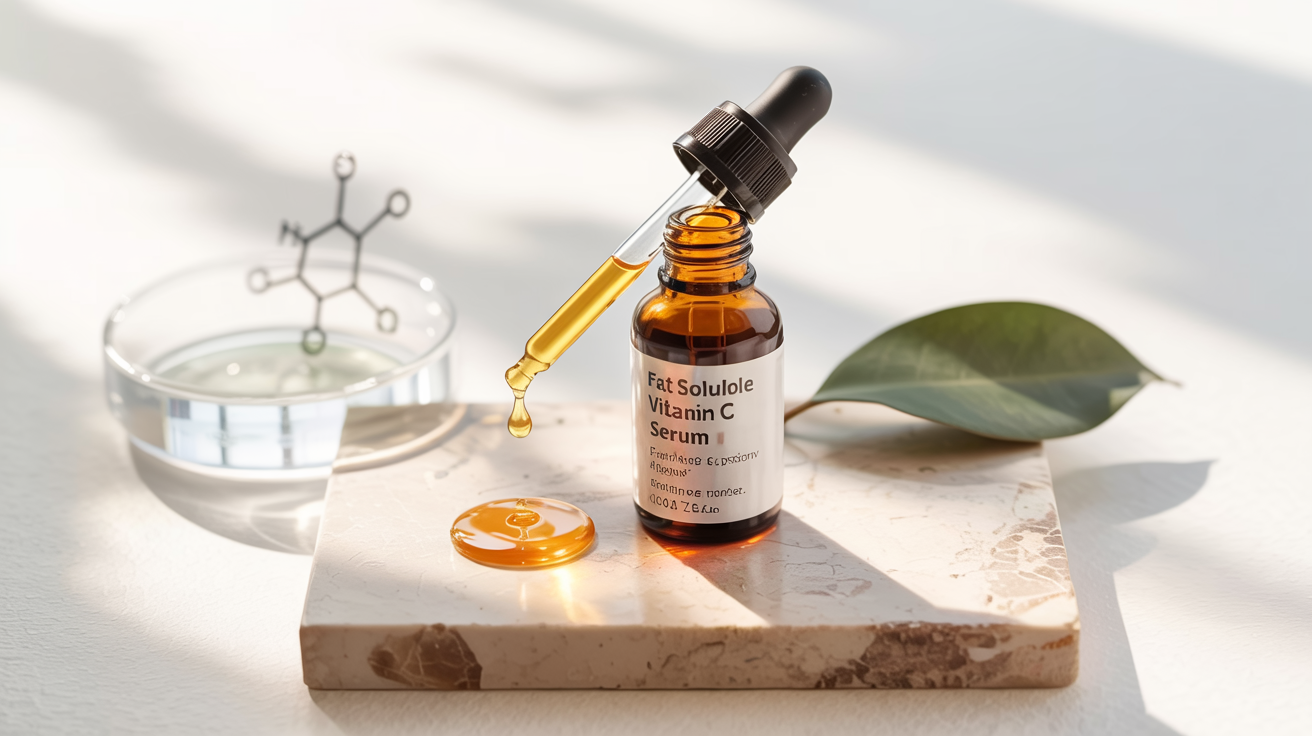
Fat soluble vitamin C serum is a significant advancement in skincare, providing the renowned anti-aging and brightening effects that come from vitamin C in an easy, stable and deeply absorbing form. Unlike traditional water-soluble ascorbic acid, this new formula is encapsulated with fats, making it suitable for dry, sensitive or older skin types who may have had issues with traditional vitamins C products. For those who want to diminish hyperpigmentation, reduce wrinkles, and get radiant skin that isn’t irritated knowing the fat-soluble vitamin c serum is crucial.
If you’ve experienced redness, stinging or a rapid oxidation process with an ordinary vitamin C supplement, then you’re definitely not the only one. Many powerful antioxidants can be unstable and cause irritation. The fat-soluble vitamin c serum can solve these issues using derivatives such as Tetrahexyldecyl Ascorbate (THD Ascorbate) that combine the benefits of vitamin C and the benefits of fats for the skin. This guide will provide the reasons this particular serum type is creating excitement within the world of skincare and how to incorporate it into your regimen for transformational outcomes.
The Science Behind Fat Soluble Vitamin C: Why It’s Different
To fully appreciate the advantages of the benefits of a fat-soluble vitamin C serum first, be aware of the differences between the water-based ones. The traditional serums utilize L-ascorbic acid which is a potent but instabil and potentially irritating type of vitamin C, which dissolves in water.
- Enhanced Stability and Shelf Life The main benefit that fat solubility has is the stability. L-ascorbic acids degrades rapidly when exposed to light or air becoming yellow and diminishing its potency. A fat-soluble vitamin c serum is more stable, meaning that it remains active and effective within the bottle for longer, giving you maximum benefit from beginning to the end.
- Superior Skin Penetration Our skin’s outermost layer (the stratum corneum) is rich in lipids. According to the principle that “like dissolves like” suggests the idea that the fat-soluble vitamin C serum can penetrate the lipid barrier with greater efficiency than a water-soluble type. This enables vitamin C to penetrate deep into the skin, which allows it to perform more effectively in collagen production and the pigmentation.
- Soft on the skin by avoiding the skin’s acidic layer and not requiring a pH of low to work, fat soluble vitamin C skin care is considerably more likely not to trigger irritation, stinging or irritation that is associated with the pure form of L-ascorbic. This makes it an ideal choice for those with sensitive skin.
Key Benefits: What Can a Fat Soluble Vitamin C Serum Do for You?
The inclusion of the fat-soluble vitamin c serum to your daily routine provides a myriad of scientifically proven advantages for a healthier and more youthful appearance.
- Enhances the appearance of skin and Fades hyperpigmentation It is among the most desired results. Vitamin C blocks the enzyme tyrosinase that is essential in the production of melanin. Through interfering with this process the fat-soluble vitamin C serum will effectively reduce sun spots, dark spots, melasma, as well as hyperpigmentation after inflammation, resulting in an even and glowing skin complexion.
- Enhances Collagen as well as Elastin Creation: Vitamin C is necessary as a cofactor for the production of collagen the protein which keeps our skin firm and plump. Because it penetrates deeply into the skin, the fat-soluble vitamin c serum can boost collagen and elastin production within which reduces the appearance of wrinkles and fine lines and increasing firmness of the skin.
- Delivers Potent Antioxidant Protection All entire day our skin gets exposed to free radicals caused by ultraviolet radiation as well as pollution. These substances damage the skin cells and speed up aging. Vitamin C is powerful antioxidant that neutralizes free radicals. Utilizing the vitamin c that is fat soluble serum every day helps protect your skin from the environmental harm.
- enhances Sunscreen effectiveness It’s not a substitute to sunscreen, Vitamin C functions synergistically with broad-spectrum sunscreen. It can “mop up” free radicals which sunscreen may not be able to completely block, thereby giving a second layer of photo-protection, making your sunscreen more efficient.
Who Should Use a Fat Soluble Vitamin C Serum? Identifying Your Match
One of the biggest strengths of vitamin C that is fat-soluble beauty products is its broad-based suitability. It overcomes the limitations of the traditional serums to address particular skin issues.
- People with sensitive skin If your skin reacts quickly by stinging, redness, or peeling, due to substances that are active, this product is the one for you. The non-irritating lipid system of delivery gives you all the benefits without the usual unwanted side effects.
- for those with mature or dry skin The formulation with lipids may provide a more emollient and moisturizing feel. For skin that is mature and seeking benefits from anti-aging or dry skin requiring additional liquid support A fat-soluble vitamin c serum is a great replenishing and hydrating treatment.
- People wishing to fade hyperpigmentation that is stubborn due to its greater permeation, it’s more efficient in giving vitamin C to deep layers of the skin in which pigment cells reside and is a potent treatment for melasma as well as age spots.
- Skincare enthusiasts and Ingredient-savvy Consumers for those who like cutting-edge, stable and beautifully formulated actives, HTML0 is the next level of efficient vitamins C.
How to Choose the Best Fat Soluble Vitamin C Serum
There are many serums that are not to be the same. This is what you should be looking for when choosing the best fat-soluble vitamin C serum for your requirements.
- Find the Key Ingredient Look at “Tetrahexyldecyl Ascorbate” (THD Ascorbate) or “Ascorbyl Tetraisopalmitate” high on the list of ingredients. They are among the more popular and researched types of fat-soluble vitamin C.
- Take into consideration the concentration THD Ascorbate has been proven to be more effective in lower amounts than L-ascorbic acid. A concentration ranging from 5% to 20% is usually efficient. The label should clearly state the percent.
- Examine the supporting cast The best serum that contains vitamin C and other components that are complementary. Find synergists such as:
- Vitamin E The most well-known antioxidant partner that replenishes vitamin C and increases its photoprotective abilities.
- Ferulic Acid stabilizes the formula, and also provides antioxidant benefits.
- Hyaluronic Acid: Hydrates, plumping the skin and diminishing the appearance of wrinkles.
- Niacinamide is a good partner in conjunction with vitamin C to improve the function of the skin barrier and improve tone.
- Packaging matters While it is not solid, an opaque, airless pump bottle remains the standard for maintaining the antioxidant potency of any serum, such as vitamin c that is fat-soluble serum.
- Texture and the feel If you suffer from an oily complexion seek out light, fluid serums that are labeled by the term “non-comedogenic.” If you have dry or irritated skin, look for a more hydrating serum or fat-soluble vitamin C cream could be a better choice to provide extra moisture.
Integrating the Serum in Your Skincare Routine
Utilizing your serum properly is the most important factor to see the results you want to see. Follow this simple step-by-step guide.
Morning Routine (For Antioxidant Protection):
- Cleanse
- Tone (if employed)
- Apply your vitamin c, fat-soluble and soluble serum on dry skin. Use 3-4 drops on the entire neck and face.
- Apply a moisturizer suitable to the type of skin you have.
- Important step: Always finish with a broad-spectrum sunscreen (SPF 30 or greater).
Evening Routine (For Skin Repair):
- Double cleanse to wash makeup and sunscreen.
- Apply your vitamin c that is fat-soluble serum. It is effective and stable to use at night to aid in the repair of your skin and renewal.
- It is possible to layer it on top of other treatments. It usually works well with hydrators or peptides like the hyaluronic acid. Take care when combining it with powerful exfoliants (like BHAs/AHAs) or retinoids. Start slowly and test the tolerance.
- Then, finish with a rich night cream or moisturizing lotion.
Debunking Common Myths About Fat Soluble Vitamin C
- The myth: It’s not as efficient than L-ascorbic acids.
- The truth: While the research on L-ascorbic acids is more extensive, studies of Tetrahexyldecyl Ascorbate reveal that it’s highly effective in improving the appearance of collagen and stimulating it. Its higher effectiveness and stability make the product more efficient in daily use for many individuals.
- Myth The myth is that it’s too oily for oily or acne-prone skin.
- The truth: A well-formulated vitamin c serum that’s fat-soluble to treat oily skin is light and non-greasy. The presence of lipids doesn’t necessarily mean it can clog pores. In fact THD Ascorbate is regarded as non-comedogenic. Search for oil-free and light formulas.
- Myth It is said that you don’t require sunscreen when you use it.
- Reality: This is dangerously wrong. The vitamin C serum you use regardless of the type can provide adequate protection from sunburn by itself. Sunscreen is the absolute essential part of any daily routine to avoid UV damage and safeguard the health of your skin.
Conclusion Conclusion: A fat-soluble vitamin c serum is an elegant, gentle and highly effective solution for those who want the renowned advantages of vitamin C, but without the disadvantages. Its durability along with its deep penetration and the ability to work with sensitive skin makes it an outstanding option in the world of modern skincare. When you choose a product that is well-formulated and making it a regular part of your routine, you will get firmer, brighter and more durable skin.
Have you made the change from a conventional Vitamin C cream to a fat-soluble formulation? What are the differences you noticed in the skin’s tolerance and outcomes? Please share your experiences in the comments section below!