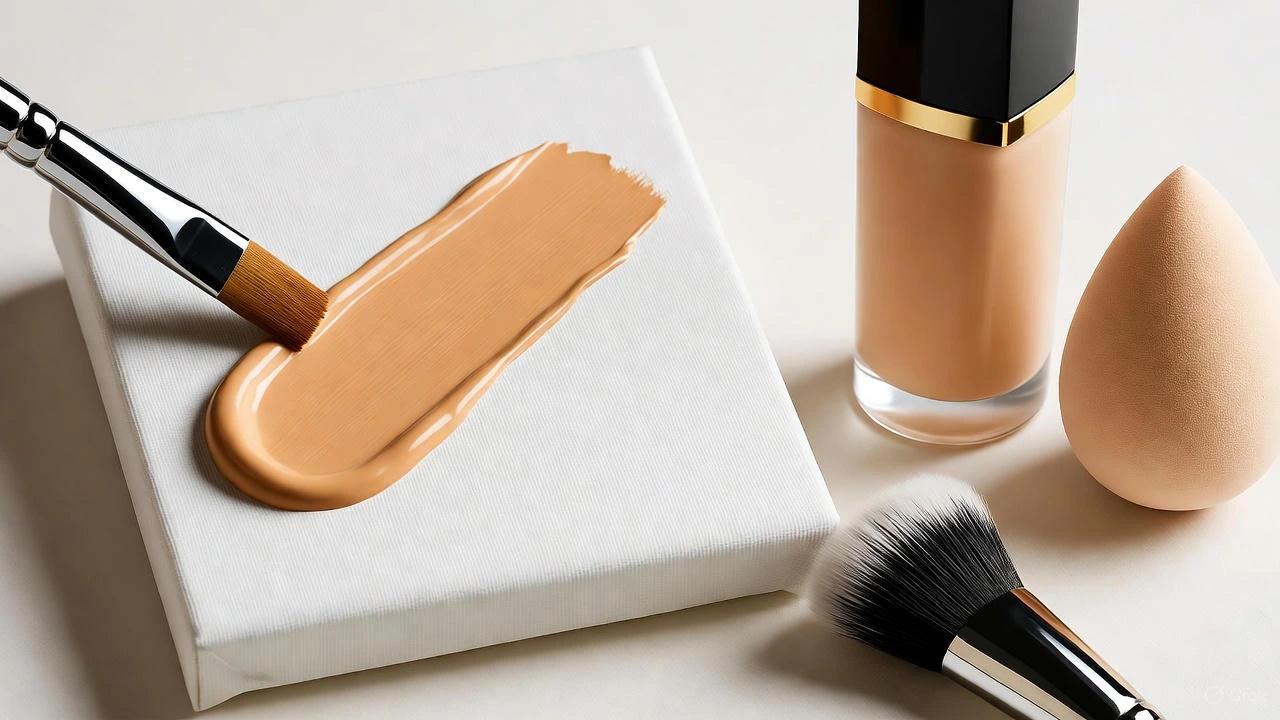
If you’re just beginning to explore makeup you may be asking yourself: what does foundation perform in the makeup industry? Foundation is perhaps the most crucial cosmetic product you can have in your arsenal. It’s it’s a flexible base that makes the perfect canvas for other cosmetics. Consider it a primer coat you apply to on a wall. It creates an even, smooth surface that allows everything else to be more effective to last for longer.
Fundamentally, foundation serves to make your skin appear more even and cover imperfections, and form an even foundation that helps make everything else in your effortless and professional . It doesn’t matter if you want an unnatural “no-makeup” look or full-glam flawlessness, knowing the function of foundations when it comes to the makeup routine can be the very first thing you do to understanding your routine. This comprehensive guide will take by the entire process you must be aware of about foundation, from its essential functions to selecting the best makeup for your particular skin type.
What Is Foundation and What Is Its Primary Purpose?
Foundation is a product for the complexion that is available in cream, liquid or powder form, which is designed to complement tones and natural color of your face . However, what exactly is foundation used to do when it comes to makeup other than giving your face a color?
The principal function that foundation serves is to provide what makeup artists refer to as”a “blank canvas”–a smooth even, even foundation that allows other products, including bronzer, blush and eyeshadow, be applied more evenly and appear more radiant . With no foundation you may discover that your concealer appears rough, your blush looks uneven and your makeup won’t last as long through the day.
Foundations have evolved considerably from the heavy, cakey foundations from the days of thick, cakey. These days, foundations are often formulated with skin benefits such as hyaluronic acid to hydrate, niacinamide for calm skin redness, SPF for sun protection and antioxidants to aid in protection against the elements . The combination of skincare and makeup ensures that the latest foundation does more than just improve your appearance instantly, but it can help improve the health of your skin as time passes.
The 3 Key Things Foundation Does for Your Makeup
1. Creates a Uniform Base
Foundation’s main function is to create a smooth and even foundation to the remainder of your make-up application . It reduces the contrast between various tones and the texture of your face creating the flawless “canvas” that makeup artists often refer to. This smooth surface will ensure that other products such as bronzer and blush blend flawlessly instead of being absorbed by the dry areas or redness.
2. Evens Out Skin Tone
A majority of people experience some level of natural discoloration that appears on their faces, whether it’s skin redness around the nose, darker areas underneath the eyes, or marks from acne post-treatment. Foundation is specially designed to make your skin appear more even by neutralizing the appearance of discolorations, and ensuring a uniform shade across your face . It doesn’t mean concealing your skin’s natural appearance; even a little coverage can help to balance tone but still let your natural skin shine through.
3. Enhances Your Natural Appearance
Contrary to what many believe foundations shouldn’t appear like a face mask. If it’s applied correctly and chosen it can improve your appearance by presenting the illusion of flawless skin, while appearing as if you are skin . The aim is to let people know how beautiful you appear and not the amount of foundation you’re using. This is the reason finding the perfect formula color, shade, and application method is crucial in solving the issue of what should you use your foundation to do efficiently.
Top Benefits of Wearing Foundation
Knowing the advantages of using foundation extends beyond the cosmetic benefits. This is why foundation is an essential component of the beauty routines of all over the world:
- creates flawless-looking skin: Foundation minimizes the appearance of lines, pores and imperfections, resulting in the airbrushed look that many want .
- Enhances confidence When your skin is smooth and even it naturally boosts confidence in yourself. Many people report that wearing foundation makes to feel more polished and at ease in their own skin .
- Offers Protection Benefits Modern foundations have SPF to protect against sun-induced damage, as well with antioxidants that guard against pollution from the environment . Many contain ingredients that can improve the health of your skin as time passes.
- Enhances the longevity of your makeup by creating a smooth foundation which assists in making the rest of your makeup to stick better and last longer through the day without flaking or tearing.
- offers buildable coverage In contrast to other makeup products, foundation is extremely versatile. You can apply a light layer to create a natural appearance and build up to get greater coverage when you need it .
Different Types of Foundation: Formulas, Coverage & Finishes
With so many options the choice of a foundation may be overwhelming. Let’s look at the various types of foundations to help you decide the best one for the type of skin you have and appearance.
Foundation Formulas
| Formula Type | Best For | Key Characteristics |
|---|---|---|
| Liquid Foundation | Skin types of all kinds; the most adaptable | Blendable natural to full coverage Different finishes |
| Cream Foundation | Skin that is dry to mature | Hydrating, fuller coverage, luxurious feel |
| Powder Foundation | Oily/combination skin | Easy to apply, oil-absorbing covering from natural up to medium |
| Stick Foundation | Combination skin; on-the-go use | Flexible, buildable coverage can double as a concealer |
| Serum Foundation | Skin dry; beauty enthusiasts | Lightweight water-retaining and light to medium coverage |
| Tinted Moisturizer | Normal/dry skin with minimal makeup days | Hydrating, light coverage, natural appearance |
Foundation Coverage Levels
Coverage is the measurement of how much pigment is in the foundation and the amount it covers. Knowing these levels can aid you in achieving the look you want:
- The Sheer Coverage provides a subtle shade of color, and evens skin tone, while letting your natural skin shine through fully. Perfect for people with flawless skin that wants an “no-makeup” look .
- Medium Coverage provides slightly more color than the sheer formulas, allowing to reduce minor imperfections, but still appearing natural. Ideal for wear every day .
- Medium coverage Medium Coverage: A healthy middleground that conceals small discolorations, redness and other minor imperfections, all while appearing like skin. Ideal for those looking to achieve a balanced coverage and natural looking .
- Fully Coverage contains the highest color level to completely cover imperfections, scars and discoloration that is significant. It is often used for special events and photography, or whenever you need a flawless appearance .
- buildable coverage The formulas can be used lightly to provide sheer coverage or applied in layers to give more opacity. This gives the user total control over the style .
Foundation Finishes
The finish is what the foundation looks like on your skin after applying it:
- Matte finish It’s completely shine-free with an appearance that is flat. It is ideal for those with oily skin or those who prefer a smooth appearance .
- Dewy End It gives a glowing, radiant look with reflection properties of light. Ideal for dry skin or people who want a fresh and youthful look .
- Natural / Satin-Fine mimics the look of healthy skin. It’s not too matte or shiny. It is suitable for all types of skin and conditions .
- Bright Finish similar to dewy, but with more intense radiance. It gives an “lit-from-within” glow. Ideal for mature or dry skin .
How does foundation work with Different Types of Skin?
The right makeup foundation that matches your is vital to get an ideal result. Here’s a quick guide:
- Oily skin Choose formulations that are oil-free, and non-comedogenic with matte or semi-matte finish. Foundations that are liquid matte and powder are great for reducing shine throughout the day .
- Dry Skin Hydrating formulations with luminous or dewy-looking shades complement dry skin best. Liquid, serum and cream foundations that contain ingredients such as hyaluronic acid supply the much-needed moisture .
- Combine Skin It is possible that you will require a plan-of-action, such as using an organic finish foundation in general and then applying powder to the oily areas. The formulas for buildable coverage allow the user flexibility when needed .
- Normal Skin You’ll have the greatest flexibility! You are able to experiment with various formulations and finishes, according to your personal preference .
- Skin that is sensitive Mineral foundations and formulas with a label that says hypoallergenic or free of fragrance are your best options to prevent irritation .
A Beginner’s Guide: How to Apply Foundation
If you’ve a better understanding of what foundation is in makeup we can discuss what to do with it to get the most natural look. Follow these tips for flawless makeup:
Step 1: Begin with the skin that is prepared.
Always start with a clean and moisturized skin. If you have more time applying a primer that is suited the type of your skin can make a more smooth foundation and make keep your foundation in good condition for an extended time .
Step 2: Choose Your Application Tool
- Fingers: Warm the foundation using your fingers, then press the foundation into your skin to create natural, light application. Ideal for cream and liquid formulas.
- Beauty Sponge Use a damp sponge before bouncing it it and rub it on your skin to create seamless, buildable coverage with no streaks.
- Foundation Brush Make use of an extensive buffing brush to get greater coverage, or an angled foundation brush for precise application. Buff with circular motions to create an airbrushed look.
Step 3: Apply and Blend
Start small and you can always increase the amount. Place a dot of foundation in the middle on your face (forehead the nose, cheeks the chin, cheeks) and blend it outward. Make sure to blend it into your neck and jawline to stay clear of obvious lines .
Step 4: Set if Necessary
If you’re prone to oily skin or wish for the makeup you put on to last the whole day long, lightly apply translucent powder to your T-zone. For those with dry skin, you may prefer a spray for setting .
Foundation in comparison to. Concealer vs. Tinted Moisturizer What’s the difference?
Many beginners to makeup wonder about the differences between tinted moisturizer and foundation or if concealer and foundation are one and the same. Understanding these distinctions can make it easier to use the products effectively:
- Foundation Concealer. Concealer Both provide coverage, foundation is designed to be applied all over the face, creating an even base, while concealer has more pigmentation and can be used to treat specific areas such as under-eyes or spots . Both work in tandem, rather than being interchangeable.
- Foundation and. tinted Moisturizer: Foundation typically has more coverage and lasts longer and is more durable, whereas tinted moisturizer gives a minimal amount of coverage and the added benefit of moisture . Tinted moisturizers are great to use on “no-makeup” days when you only want a little night-time fun.
Do You Need Foundation for Makeup?
It’s probably the most frequently asked question that people have: do I need foundation to apply makeup? The truth is that foundation isn’t a requirement. The decision to get it or not is entirely dependent on your personal preferences, skin type and the style you’re attempting to attain.
You might skip foundation if:
- You are naturally clear and even skin tone with only minor discoloration
- You like a very natural, minimal makeup style
- You’re in a rush and you’re looking to simplify your life
- Your skin is extremely sensitive and you’re unable to find an effective formula for you.
Understanding why foundation is essential in makeup will help you understand the role it plays in. Even if you’re not wearing it every day knowing how to apply it properly will give you more options for occasions when you may want to have an elegant look.
Common Foundation Mistakes Beginners Make
When you begin to experiment with foundations, be on the lookout for these common mistakes:
- Selecting the wrong Shade Check the foundation on your jawline in natural light to determine your ideal shade. Do not test on your wrist or hand .
- Applying too much product Start with a small amount, and add more only when it is you need to. Keep in mind that it’s simpler to increase the amount than it is to get rid of excess.
- Neglecting your neck and decolletage Make sure to blend foundation around your neck to prevent an evident line of delimitation.
- Utilizing the Wrong Formula to Match Your Type of Skin Think about your skin type when choosing the foundation formula, to make sure that it is formulated to work with your skin, not against it.
- Skip Skin Prep A clean and moisturized skin can make an enormous difference in the way foundation is applied and worn throughout the day.
Frequently Asked Questions
It is it acceptable to wear foundation all day long?
Yes, provided that you choose an ingredient that is compatible with your skin type. Also, always take it off completely when you’re done with your day. Indeed, daily-wear foundations that contain SPF offer protection for a long time from sun-induced damage .
How do I pick the best foundation shade?
Examine shades along your jawline, look the shades in natural light and think about the undertones of your skin (warm cool, cool, and neutral) . Many beauty stores provide online tools to try on makeup or shade-matching solutions to assist.
Does foundation really improve my skin?
Certain modern foundations include skincare ingredients such as hyaluronic acid Vitamins, antioxidants, and hyaluronic acid that may provide advantages over time . But, foundations should not substitute for a good routine of skincare.
How long do foundations typically last on your skin?
It varies based on the formula but the majority of foundations last from 6 to 12 hours. Long-wearing foundations can last for as long as 24 hours, but applying a touch-up may be required for those with oily skin types .
What’s the most efficient method to get rid of foundation?
Make use of a specific make-up remover or cleansing oil or balm. Follow it up with your usual facial cleanser to ensure that any traces of makeup are gone before you go to you go to bed.
Conclusion: Finding Your Perfect Foundation
Knowing the function of foundation for the makeup process can be the initial step to master the use of foundation for your beauty routine. Foundation serves as the cornerstone of makeup application–creating an even canvas, balancing skin tone, and enhancing your natural features while providing a base for other products.
The crucial element to a successful foundation is in deciding on the appropriate formula as well as shade and coverage to meet your personal requirements and preferences. Don’t be afraid to play with different samples, request expert shade matchups, or test various application methods until you can determine what is most effective for you.
Make sure that your makeup is playful and exciting. No matter if you want an all-over glam or barely-there shade, the appropriate foundation will help to feel confident as well as secure within your skin.
What is your biggest obstacle in applying or finding foundation? Tell us about your experience in the comments section below. We’d be happy to assist you in your journey to make-up!