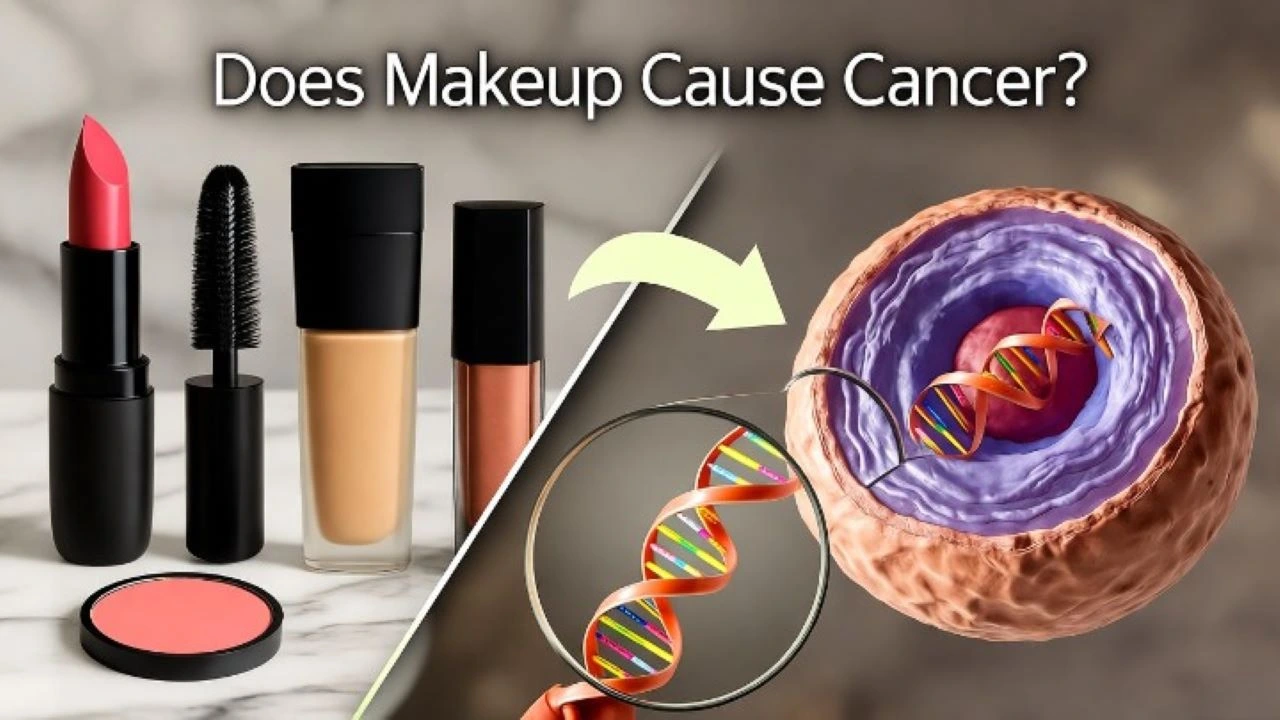
If you take a look at your makeup bag every morning, you’re likely contemplating how you can look your best, and not worrying about health risks. However, a lot of us are left with concerns about the products that we use on our skin every day. Do makeup products result in skin cancer? This concern has increased as we are becoming increasingly aware of harmful chemicals used in cosmetics and personal care products. With the proliferation of contradicting information online and worrying headlines, it’s difficult to discern fact from rumour.
The truth about the safety of cosmetics is a bit ambiguous. Although research doesn’t indicate that we should stay clear of cosmetics altogether research has identified potential dangerous ingredients in some cosmetics . Understanding the science behind rules, and the actual dangers can help you make informed decisions without stress. This comprehensive guide outlines the evidence, details the ingredients that are of concern, and gives practical guidelines for navigating the complicated world in the field of safety for cosmetics.
How Makeup Interacts With Your Body: The Absorption Question
The Skin Absorption Debate
To be aware of the risks that could arise To understand the potential risks, first we must investigate the way that cosmetics affect the body. The skin acts as an effective barrier to protect you, but it’s not completely impermeable. Does your skin absorb chemicals? The answer is yes, however with certain limitations.
The molecules that are lipophilic (fat-soluble compounds) that are not charged with electricity and having a molecular weight of less than 500 Da can penetrate the skin . The degree of absorption varies on a variety of factors, including specific chemical properties, the amount of the product, the frequency of application and the overall condition of your skin barrier. This brings us to the most important issue: How much makeup is being absorbed? While some ingredients can penetrate, the amount is usually minimal, but there are concerns about exposure for a long time as well as the effect that the cumulative effects of toxins from different products .
Makeup Application and Exposure Routes
Cosmetics’ chemical exposure isn’t just limited to absorption through the skin. The most likely routes are:
- Inhalation Sprays such as dry shampoos, aerosol sunscreens and powdered makeup may be inhaled and bypass the body’s defense mechanisms .
- Exposure to mucous membrane Products that are applied close to eyes, lips and nasal passageways are more absorbent.
- Ingestion by accident Lip products are often consumed in small amounts during the course of the day.
Table Chemical Absorption Routes of different types of makeup
| Makeup Type | Primary Absorption Route | Special Considerations |
|---|---|---|
| Foundation & Concealer | Skin absorption | Greater area of application increases the the risk of being exposed |
| Lipstick & Lip Gloss | Mucous membrane + accidental ingestion | Direct access to the digestion system |
| Powder & Spray Products | Inhalation | Bypasses skin barrier entirely |
| Mascara & Eye Products | Mucous membrane + eye absorption | Area sensitive to absorption with greater absorption |
Ingredients of Concern: Examining the Evidence
Formaldehyde and Formaldehyde-Releasers
Formaldehyde, a human carcinogen, and remains present in a few cosmetics, but usually in disguised forms . While most products don’t contain formaldehyde itself, many use formaldehyde-releasing preservatives that slowly release the chemical over time to extend shelf life.
A 2025 study published in Environmental Science & Technology found that 53% of participants regularly used personal-care products containing formaldehyde or formaldehyde-releasing preservatives . These chemicals were found everywhere from soap and shampoo to eyelash glues as well as products to lighten the skin. This is a particular issue especially for Black women and Latina women that research suggests that they are more likely to be exposed to formaldehyde via hair straightening products as well as other cosmetics .
On product labels, watch for these formaldehyde-releasers:
- DMDM hydantoin
- Imidazolidinyl urea
- Quaternium-15
- Bronopol
Heavy Metals in Makeup
Metals that are used in makeup such as mercury, lead, cadmium and arsenic aren’t generally intentionally used ingredients, but instead are substances that come from color pigments as well as other raw ingredients . They may be present in cosmetics like lipsticks, foundations and eyeshadows. Although they can be found in tiny quantities in a variety of items, concerns are raised regarding bioaccumulation, the effects of chemical being absorbed into the body over time .
Endocrine Disruptors: Parabens, Phthalates, and More
Endocrine disruptors are chemicals which interfere with the body’s hormone system and some have been linked with hormone-driven cancers, including breast, ovarian as well as prostate cancer . Although the evidence linking the use of personal care products with cancer is still insufficient, scientists continue to investigate the connections.
The most common endocrine disruptors found in cosmetics are:
- Parabens (methylparaben, propylparaben, etc. ) used as preservatives that mimic estrogen within the human body .
- Phthalates commonly present in perfumes and nail polishes. They help products stick to the skin.
- Benzene is a known carcinogen, it has been detected in a variety of dry shampoos and aerosol products .
- Triclosan A antimicrobial ingredient that is sometimes included in cosmetics.
It is important to remember it is Cancer Research UK affirms the following “parabens do not cause cancer” Based on the latest research however some people prefer not to use them .
Talc and Asbestos Contamination
The risk of cancer from talcum powder is a subject of debate in the media as well as the courts. The issue stems from the fact that asbestos is a natural component of talc in the earth, as well as an earlier history of contamination between these two minerals. Asbestos is known as a carcinogen. While the latest cosmetic-grade talc is asbestos-free, concerns remain as to whether talc’s own properties could pose dangers, specifically for ovarian cancer if applied to genital areas .
Research on the subject has been mixed with certain studies suggesting an increase in the risk of developing Ovarian cancer in connection with genital talc use, whereas other trustworthy studies have found no connection . Further research is required to reach conclusive conclusions.
The Regulatory Landscape: How Cosmetics Are Governed
Differences Between Regions
Cosmetic regulations differ greatly by region, impacting the safety of ingredients:
- European Union: is the most stringent of cosmetics rules, having prohibited or restricted over 1,300 chemicals in cosmetics. The EU prohibited formaldehyde as an cosmetic ingredient in the year 2009 .
- United States: The FDA regulates cosmetics but in a different way as drugs. The FDA is not able to mandate pre-market safety evaluations .
- United Kingdom: The UK adheres to strict EU-derived regulations governing cosmetic ingredients .
This regulatory patchwork can mean that the same product may be sold in different formulations or with different safety profiles based on the location it’s distributed.
The “Fragrance” Loophole
A major regulatory lapse one of the most significant regulatory gaps is one of the biggest regulatory gaps is “fragrance” loophole. In many countries manufacturers are able to simply write “fragrance” or “parfum” on the label of their ingredients without revealing the specific chemical constituents since these are classified as trade secrets. The word “fragrance” can conceal many potentially harmful chemicals which include hormone disruptors .
MD Anderson’s Integrative Medicine Program director says: “If a product has a strong scent, that is a warning sign that it may contain an endocrine disruptor” .
What Does the Research Really Say? Beyond the Headlines
Understanding Limitations in Cosmetic Safety Research
When looking at claims concerning the health effects of makeup It is crucial to be aware of the limitations of research currently in use:
- Cumulative exposure Although certain products might contain small amounts of potentially harmful chemicals Researchers are still analyzing the effects of exposure to a variety of chemicals from a variety of sources .
- Combine Effects There’s only a little information on how hundreds of chemicals that we use each day interact within our bodies .
- Industry Finance The majority of safety research is financed through the industry of cosmetics and can result in conflicts of conflict of.
- Animal Vs. Human Studies: A number of alarming findings are from studies conducted on animals using levels that are far higher than the typical human exposure .
Professional vs. Personal Use Risks
There are times when research distinguishes between professional and personal use in which the former is often having clearer risk factors because of higher levels of exposure. As an example, even though the use of personal hair dyes hasn’t been linked with cancer, some evidence suggests that barbers and hairdressers who use their services on a regular basis prolonged exposure to chemicals could be more susceptible to risk of bladder cancer .
Practical Protection: 5 Actionable Steps for Safer Makeup Use
1. Become a Label Detective
The ingredient lists can be a bit overwhelming however, being able to recognize the most important components is your first step to protect yourself. Be especially cautious of:
- Formaldehyde-releasers (DMDM hydantoin, imidazolidinyl urea, quaternium-15)
- Ingredients that contain “PEG,” “polyethylene,” or “-eth-” (may contain 1,4-Dioxane)
- The vague word “fragrance” or “parfum”
- Metals that are heavy (rarely listed, since they’re generally considered to be contaminants)
MD Anderson’s Integrative Medicine Program recommends: “When in doubt, choose the product that has ingredients that are all recognizable to you” .
2. Use Trusted Resources to Vet Products
Instead of spending hours looking up every ingredient, seek out reliable sources:
- The Environmental Working Group’s Skin Deep Database: The database rates products on the basis of the safety of the ingredients
- Black Women for Wellness Offers specialized information specifically for women of color
- Educational and government resources Look for sites that end with “.edu” or “.org” instead of “.com” sites that often offer products
- Apps for scanning products Many let you scan the barcode of a product for instant analysis of the ingredient
3. Rethink Your Relationship to Fragrance
Because “fragrance” can mask dozens of chemicals that are potentially harmful Consider:
- Selecting products that are fragrance-free as often as is feasible
- Making the choice to purchase products that have fragrances made of natural essential oils rather than synthetic scents
- Be especially cautious when using strongly scenting products
4. Make Strategic Changes to High-Exposure Products
It’s not necessary to dispose of all of your makeup items. Concentrate on the products that are:
- Make sure you keep your skin moisturized for the longest (foundation and primer)
- You can apply them to large areas of your body.
- They are used in close proximity to mucous membranes (eyes and lips)
- Powdered or aerosolized and can be inhaled
Even minor changes can decrease the overall amount of chemicals in your body. According to Lorenzo Cohen, Ph.D. Director of MD Anderson’s Integrative Medicine Program, advises: “Maybe it means choosing to wear makeup on weekends instead of every day, getting your nails done less frequently or switching to a cleaner product when you need a refill” .
5. Support Systemic Change While Protecting Yourself
Although individual actions are important, more general changes are required. You can:
- Support groups that advocate for more stringent cosmetic safety rules
- Select brands that are willing to provide the entire ingredient list.
- Contact companies to raise concerns regarding ingredient transparency
- Encourage legislation such as those in California Toxic-Free Cosmetics Act and similar legislation
Conclusion: Balancing Beauty and Health
What, then is makeup causing the development of cancer? Based on current research this direct link is not proven for the majority of cosmetics when used in the way they were intended . But, there are legitimate concerns regarding specific ingredients as well as the effects of a combination of chemical compounds that are present in multiple products as well as the disparity in the regulations for cosmetic safety.
Instead of avoiding cosmetics completely opt for a more mindful approach: learn about the ingredients in your products, consult trusted sources to make informed decisions, and support stricter safety standards. Keep in mind that established strategies to prevent cancer include quitting smoking, keeping an appropriate weight, shielding yourself from sun exposure, and restricting alcohol consumption. These are factors that have more evidence to support their role in the risk of developing cancer .
The industry of beauty is evolving with a growing demand for transparent and safe formulations. If you make a choice to vote your dollars and supporting companies that are committed to ingredient security, you are contributing to the health of everyone who buys.
What modifications will you do to your daily routine following having read this article? Discuss your thoughts and concerns in the comments section below. We’re here to assist you on your way toward more secure, informed choices in your cosmetics.